Electrician in Mereta, TX
Need an electrician in Mereta? We connect you with electricians who wire barns, shops, well and irrigation pump circuits, stock tank heaters and long service runs on the farms and ranches around Mereta, about 18 miles east of San Angelo.
- Barns, wells and long runs
- Clean job site, panel labeled
- Written price before work starts
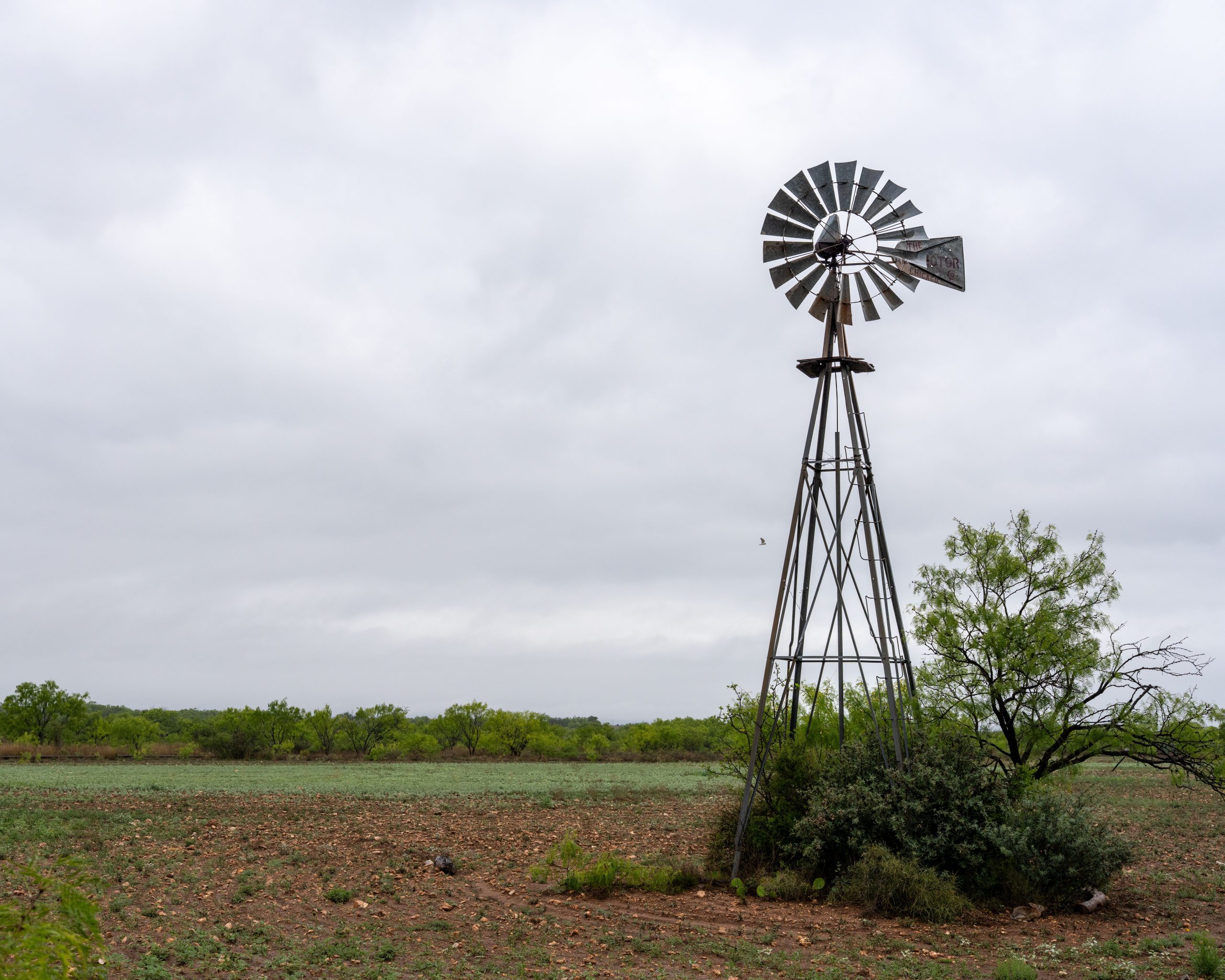
Mereta is farm country. The townsite on Lipan Creek and Farm Road 1692 is small: the whole 76940 ZIP held 128 people in the 2020 Census. That makes this page less about houses and more about barns, wells and long runs of wire across a pasture.
Who Supplies the Power Around Mereta?
The 76940 ZIP is in AEP Texas North territory. Concho Valley Electric Cooperative also serves rural Tom Green County, with about 11,000 customers in the county, so a field or barn a few miles out may be on co-op lines. Your bill tells you which: a retail electric provider means AEP Texas wires, a bill from the co-op means you are a member.
For a new building or well, talk to the utility before anyone digs. The utility decides where it will set the pole or transformer and whether three-phase power reaches your road. The distance from that point to your building is a big part of what the job costs.
Who Can Legally Wire a Barn in Texas?
Texas Occupations Code 1305.003(a)(18) exempts electrical work on a building, structure or equipment in agricultural use from the state licensing law, except where agricultural products are processed. Well pumps and their equipment can also be installed by a licensed water well pump installer instead of an electrician (1305.003(a)(19)). The house on the same property is not covered by either exemption.
Outside San Angelo, no city inspector checks farm wiring and Tom Green County issues no electrical permit. So the only thing standing between a barn and a fire is how well it was wired. Being exempt from a license does not change what the National Electrical Code asks for in a building full of dust, moisture and animals.
Barn and Livestock Wiring: What NEC Article 547 Asks For
Where animals stand
Article 547 uses an equipotential plane, wire mesh in the concrete bonded to the electrical system, to reduce the effects of stray voltage where conductive parts near animals could become energized. Where a building confines livestock, it also calls for a disconnect at the building.
Receptacles and stock tanks
The 125-volt, 15 and 20 amp receptacles in damp or wet spots, dirt confinement areas and anywhere an equipotential plane is installed need GFCI protection. That includes the outlet a stock tank heater or de-icer plugs into.
Corrosion
Manure, feed dust and humidity eat grounding clamps and steel boxes. Agricultural wiring is built to last in damp, corrosive air, with fittings rated for it.
Shops on the farm
A shop with a welder, compressor and lights is wired like any detached building: its own disconnect, its own grounding electrode, and a feeder sized for the biggest loads.
Long Runs to Barns and Wells: Size the Wire for the Distance
On a farm the barn or well can be hundreds of feet from the meter. Every foot of wire loses a little voltage, and a pump or welder at the far end starves when too much is lost. The NEC’s informational note recommends no more than 3% voltage drop on a branch circuit and 5% feeder and branch combined. Here is what that looks like for one 30-amp load at 240 volts on copper wire:
| Copper wire size | 150 ft away | 300 ft away |
|---|---|---|
| 10 AWG | 4.7% drop | 9.3% drop |
| 8 AWG | 2.9% drop | 5.8% drop |
| 6 AWG | 1.8% drop | 3.7% drop |
| 4 AWG | 1.2% drop | 2.3% drop |
Our math, from the conductor resistances in NEC Chapter 9, Table 8 (uncoated copper). One-way distance. Real jobs also count motor starting current and aluminum options.
Wire that is legal for 30 amps at 50 feet can be too small at 300 feet. That is why an electrician asks for distances before pricing a barn, a well or a new shop or ag building. Adding circuits to an existing barn is covered on our wiring and new circuits page.
Irrigation Wells on the Lipan Flats
The cropland east of San Angelo sits on the Lipan aquifer, in the farming area the Texas Water Development Board calls the Lipan Flats. Cotton, grain sorghum and wheat are the main crops, and the number of irrigation wells there grew from about 200 in 1990 to more than 1,000 by 2000 as center pivots came in.
An irrigation well is a motor load, often a large one. The pump installer handles the pump. The electrician handles the service, disconnect, controls wiring and the run out to the pivot or well head. If a well stops and the breaker or fuses look fine, an electrical repair visit starts with voltage at the disconnect so you know quickly whether you need an electrician or the pump installer. When an outage would leave stock without water, a standby generator with a transfer switch is worth pricing.
Before You Call: Have This Ready
- Whether animals will be housed in the building.
- Gate codes, and whether a truck can reach the site after rain.
- Where water lines, gas lines and old buried wire run, if you know.
- What will run there: pump horsepower, welder amps, heaters, lights, fans.
- Which utility serves the meter: AEP Texas (through your retail provider) or Concho Valley Electric Cooperative.
- The distance from the meter or pole to the building, well or pivot. Pacing it off is close enough for a first price.
Mereta Electrician Questions
Do you cover Mereta?
Yes. Mereta is in our regular service area, about 19 miles from downtown San Angelo by road, east on Farm Road 380 and then Farm Road 1692. Plan on roughly 35 minutes of drive time.
Do I need a permit to wire a barn near Mereta?
Not from the City of San Angelo, which permits work only inside its limits, and Tom Green County issues no electrical permit. The county does permit septic systems and building in mapped floodplains.
Can my ranch hand legally wire the barn?
Texas Occupations Code 1305.003(a)(18) exempts electrical work on buildings in agricultural use from the licensing law. The house is not exempt, and the barn still has to be wired safely for dust, damp and livestock.
Who fixes an irrigation or stock well that quit?
If power reaches the well’s disconnect and control, the pump itself is work for a licensed water well pump installer. If it does not, the problem is in the wiring and an electrician fixes it.
Why does a long run to the barn need bigger wire?
Wire loses voltage over distance. At 300 feet, 10 AWG copper carrying 30 amps at 240 volts loses about 9%, three times the NEC’s recommended 3%, so motors run hot and lights dim.