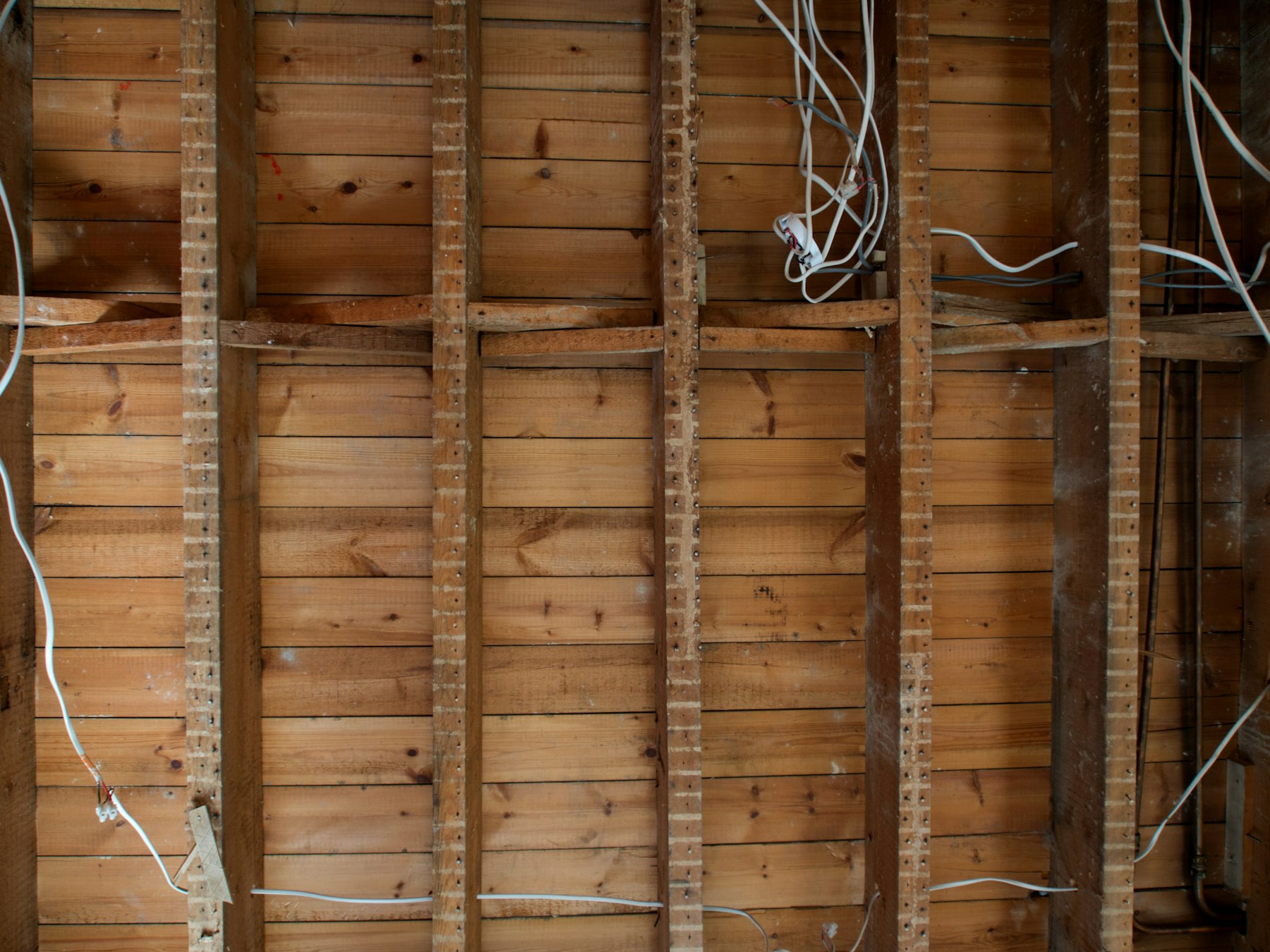
Electrical Wiring in San Angelo
Electrical wiring in San Angelo homes is often as old as the house, and more than half the city’s homes were built before 1980. We connect you with licensed electricians who rewire older houses, replace failing circuits and add new circuits for kitchens, shops and big appliances.
- Written price, circuit by circuit
- Clean job site when the work is done
- Permits pulled and City inspection passed
The U.S. Census Bureau counts 45,574 housing units in San Angelo, and 24,567 of them were built before 1980. The median home was built in 1977. The year your house went up says a lot about what is behind the walls, so start there.
Knob and tube was used from the early 1900s into the 1930s, and armored BX cable came in during the 1930s. Cloth-covered “rag” cable followed in the 1940s. None of these have a ground wire, and old rubber and cloth insulation turns brittle. Houses this old often started on fuses. If any original wiring is still in use, plan on a rewire; a home inspector will flag it.
Get a Rewire QuoteCloth-sheathed cable without a ground wire was common through the 1950s, so two-prong outlets are typical. Federal Pacific Stab-Lok panels date from this decade on. Check the outlets for ground, the insulation at a few boxes and the panel brand. San Angelo has 8,349 homes from the 1950s, the biggest group of its older housing.
Book a Wiring CheckDuring the 1960s plastic sheathing replaced cloth, and grounded outlets became more common, but plenty of houses from these years still have ungrounded runs. Zinsco panels show up in homes built from about 1963. No GFCI protection was required yet. Check the panel brand, the ground at each outlet and whether bathrooms and the kitchen have GFCIs.
Book a Wiring CheckSolid aluminum branch wiring went into homes from 1965 to the mid-1970s. The Consumer Product Safety Commission found pre-1972 aluminum-wired homes 55 times more likely to have connections reach fire-hazard conditions. Look at the cable jacket in the attic or at the panel for the word “Aluminum” or “AL”. Our aluminum wiring guide covers the approved repairs. Federal Pacific and Zinsco panels are common in this era too.
Get an Aluminum Wiring QuoteMost homes from these years have grounded copper cable, though late aluminum is possible in the mid-1970s. GFCIs were required in bathrooms from 1975, garages from 1978 and kitchen counters near the sink from 1987, so your house may only have some of them. No arc-fault protection was required. Federal Pacific breakers were sold into the 1980s and Zinsco until about 1981. The usual job here is adding circuits and GFCIs, not a rewire.
Ask About Adding CircuitsThe wire itself is rarely the problem. Arc-fault breakers only became required in 2002, starting with bedrooms, so older circuits will not have them. The common jobs are new circuits for a kitchen remodel, a garage shop, a freezer or an EV charger, and checking that the panel has room. An electrical inspection is worth it before buying any home, whatever its age.
Ask About a New CircuitHow Old Is the Wiring in San Angelo Homes?
| Built | Homes | Wiring you may find |
|---|---|---|
| Before 1940 | 1,958 | Knob and tube, BX, fuses |
| 1940s | 2,096 | Cloth-covered cable, no ground |
| 1950s | 8,349 | Cloth-sheathed cable, two-prong outlets, Federal Pacific |
| 1960s | 5,609 | Mixed grounding, Zinsco, aluminum from 1965 |
| 1970s | 6,555 | Aluminum early in the decade, few GFCIs |
| 1980s | 8,648 | Grounded copper, no arc-fault protection |
| 1990 and later | 12,359 | Modern cable; capacity is the usual question |
Housing units by year built, U.S. Census Bureau American Community Survey, San Angelo city. Wiring column is what is typical, not what is in every house.
Rewire, Partial Rewire or Add a Circuit?
Add a circuit
For a window unit, a garage freezer, shop tools or a kitchen that trips when the microwave and toaster run together. Works when the panel has space and capacity.
Typical: $250 to $900
Partial rewire
Replace the worst runs: a kitchen, a bathroom, an addition, or one failing circuit. Cost guides put a bedroom at $650 to $3,900 and a bathroom at $200 to $2,600.
Priced room by room
Whole-house rewire
Every branch circuit replaced and run back to the panel. Cost guides range from about $2 to $4 per square foot with easy access up to $5 to $17 with harder access.
Most 1,000 to 1,500 sq ft homes: about $6,000 to $17,000
Knob and tube removal costs more, about $12,000 to $35,000 for a whole house, because more wall and attic has to be opened. Room-by-room rewiring spread over years usually costs more in total than doing the house at once. If the panel is undersized or a Federal Pacific or Zinsco, a rewire often goes together with an electrical panel upgrade, and the panel should show as its own line on the estimate.
What Rewiring a House Involves
Attic and crawlspace access
New cable is pulled from above or below, then fished down or up inside the walls to each box. A walkable attic makes this much faster. A pier-and-beam house with a crawlspace gives a second route from underneath.
Slab homes
On a slab there is no crawlspace, so every run comes from the attic. Outlets low on exterior walls are the hardest to reach and need more small openings in the drywall.
Drywall and plaster
Expect a series of small cuts, usually at the top of walls and beside boxes, not torn-out walls. Patching runs about $50 to $400 per patch in cost guides; ask whether patching and texture are in the price or left for your painter.
Living at home during the work
You can usually stay in the house. Circuits are moved over a few at a time, so power is off in one part of the house at a time rather than everywhere at once. Ask for the order of rooms so you know which day the kitchen or the home office will be down.
Electrical Wiring Permits in San Angelo
- Permit
- Required inside city limits, $100 base fee plus work performed
- Inspection
- City of San Angelo
- Re-inspection
- $39
- Typical rewire
- 3 to 10 working days
The City of San Angelo requires an electrical permit for electric work inside city limits, and a rewire is inspected before the job is closed out. Covering work before it is inspected adds a $252 fee, which is one reason walls are not patched until the inspector has seen the wiring. Starting without a permit adds a fee of two times the permit.
Timing depends on size, access and how much old wiring has to be retired. Cost guides put a typical whole-house rewire at three to ten working days, plus the wait for inspection.
Electrical Wiring Questions
How much does it cost to rewire a house in San Angelo?
Cost guides put a whole-house rewire at roughly $2 to $17 per square foot depending on access. Most 1,000 to 1,500 square foot homes land around $6,000 to $17,000 once walls are opened and patched. A site visit gives you a written number.
Can you rewire a house without tearing out the walls?
Usually, yes. With attic or crawlspace access, new cable is fished through the walls and only small openings are needed. Slab homes with no attic room need more cuts, but still not open walls.
Is aluminum wiring safe if nothing has gone wrong?
The CPSC says aluminum connections can fail and overheat with no warning first. It approves three permanent repairs: replacing with copper, COPALUM crimp connectors and AlumiConn connectors. CO/ALR outlets and switches alone are not considered a complete repair.
Do two-prong outlets mean the house needs rewiring?
Not by themselves. The electrical code allows a two-prong outlet to be replaced with a GFCI outlet marked “No equipment ground”, or a ground wire can be added. Never install a three-prong outlet with no ground behind it. If the insulation is brittle, though, rewiring is the real fix.
Can I add a circuit without upgrading my panel?
Often. If the panel has open spaces and a load check shows spare capacity, a new circuit is a single job. If it is full, a subpanel or a panel upgrade comes first.
Is it worth repairing old wiring instead of replacing it?
One bad outlet or splice is a repair. Repeated failures, brittle insulation, knob and tube or aluminum branch wiring are reasons to replace the circuits instead of fixing them one at a time.